


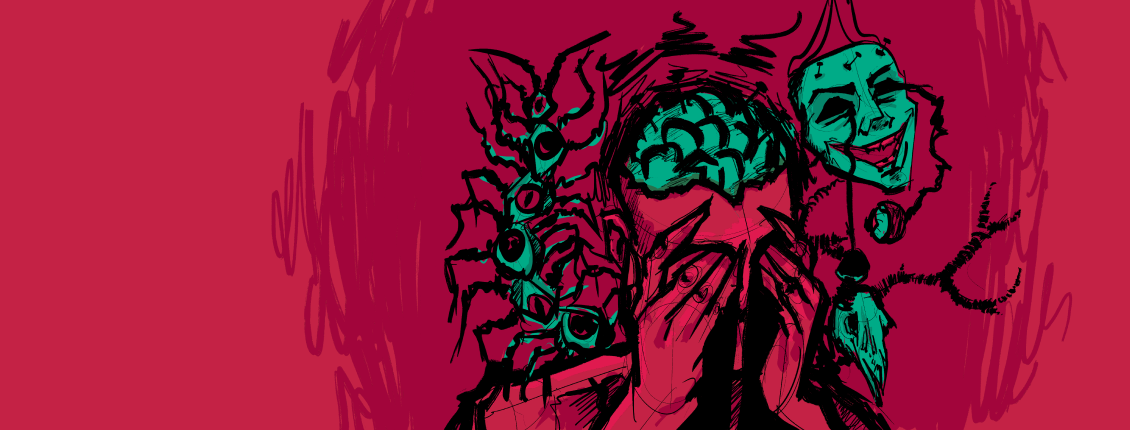
In short: Your brain knows the monster on screen is fake, but your body reacts like you’re in actual danger. Horror movies exploit your survival biology, turning pure fear into a fun ride. 
Every Halloween, millions of us happily watch things designed to send our nervous systems into a total panic. We stream supernatural nightmares, wander through endless yellow corridors, and open video-game doors that should probably stay shut.
Inevitably, we spend the next hour glancing over our shoulders and blaming every unexplained house noise for frightening us.
So why do we put ourselves through something so unpleasant? 
Welcome to the horror paradox – the psychological puzzle of why we seek out frightening entertainment when we normally try to avoid panic.
Your mind spots danger, just a little too late
Imagine stepping into an unfamiliar building and suddenly finding yourself lost in an endless maze of fluorescent lights and unsettling carpets. Nothing attacks you right away, yet you feel deeply uncomfortable.
Your nervous system is designed to spot potential hazards and get your body ready to react. A 2019 review in Frontiers in Psychology found that horror films can raise heart rates, cause sweating, and trigger anxiety, though reactions vary widely. Your perception knows you’re safe on the sofa, but your nervous system still files a formal complaint.
The scariest part is often what you cannot see
Why is a pitch-black basement often scarier than a room full of monsters? Because your brain absolutely hates a mystery it can’t solve.
When you can’t see what’s behind a door, your mind imagines the worst. Filmmakers deliberately use this, revealing just enough to make you suspicious, but not enough to put you at ease. 
A 2023 study published in Philosophical Transactions of the Royal Society B framed horror through predictive processing: the theory that the human mind constantly forecasts what will happen next.
Horror works by continuously challenging and disrupting those expectations. It is essentially a psychological escape room where the clues are ominous noises.
So why does being scared feel good?
Dread and pleasure can easily coexist. You can feel anxious during a scene while still enjoying the suspense, curiosity, and narrative payoff, mainly because you feel in control and know you are in a safe environment. 
A 2024 study in Scientific Reports involving 558 participants found that genuine fear, realism, and morbid curiosity directly increased excitement and enjoyment.
Biologically, it’s the ultimate evolutionary bait-and-switch. Your amygdala (the part of your brain that reacts to danger and fear) sounds the alarm and pumps you full of adrenaline. But the second your logical brain realizes you’re actually safe, that panic flips into a massive rush of dopamine and endorphins.
Jump scares: Your brain’s least favorite notification
You know a scary scene is building. The audio drops to a quiet hush, and you brace yourself. Suddenly, a creature charges, the soundtrack explodes, and your popcorn goes flying.
A jump scare is a sudden shock designed to make you flinch. It’s the opposite of suspense, which builds tension slowly over time. Movies use suspense to wind you up, and jump scares to deliver the final punch. If you jump at an obvious scare, don’t feel bad – that’s just your reflexes working while your dignity reboots.
Why some horror movies follow you to bed
After the movie ends, you confidently claim it wasn’t that bad… until you have to walk down a dark hallway alone.
Different types of horror linger differently. A supernatural story is easy to brush off, but a realistic home-invasion thriller gets under your skin because it feels possible. It all depends on what scares you personally, and there’s no shame in bailing on a movie if it’s too much.
The monster might be fictional, but your electricity bill from sleeping with your lights on is painfully real. 
TRY IT YOURSELF: The Halloween horror experiment
Most people never truly observe how their body processes fear. When the fight-or-flight response kicks in, rational thinking shuts down, the amygdala takes the wheel, and you’re purely reacting.
Watching a terrifying scene from the perspective of an objective observer is one of the fastest, safest ways to map your nervous system in real time.
Step 1: Pick your stressor
Pick one of these three clips to test a distinct flavor of tension:
- The Sound-Design Terror: Click here to test how your body reacts to pure silence disrupted by micro-noises.
- The Slow Paranoia: Click here to test what prolonged, creeping anticipation does to your breathing.
- The Sudden Spike (Jump Scare): Click here to test the immediate, involuntary muscle jerk and adrenaline surge.
Step 2: Track the 3 signals you normally miss
Forget the plot. Focus entirely on your physiology:
- The Micro-Apnea: Did you stop breathing seconds before the reveal? Your brain instinctively pauses your breathing to quiet your body, helping you hear approaching threats.
- Shoulder & Jaw Armoring: Notice your traps rising toward your ears and your teeth clenching. Your body is physically bracing for impact.
- Foveal Lock (Tunnel Vision): Notice your peripheral awareness fading. Your gaze locks onto the center of the screen, a hardwired response to track predatory movement.
Step 3: Strip the soundtrack (The Reality Check)
Now watch this (we promise that there is no jump scare). Notice how quickly the dread collapses into something awkward, flat, or even funny. Over 70% of raw physical dread doesn’t come from the visual facts; it comes from the audio atmosphere: the dissonant violins, low frequencies, and tense silence telling your brain “you are in danger.”
How to use this in everyday life (The « Mute Button » Hack)
The exact same illusion happens off-screen. Real-world fear almost never comes from raw facts, but from the dramatic, catastrophic soundtrack our brain layers over neutral reality. 
Whenever you feel anxiety spiking, whether it is stepping on a stage, having a tough confrontation, or dealing with everyday self-doubt, you do not have to fight the fear directly. You just need to strip away its sinister production value.
Take all that perceived menace and deliberately re-encode it as something completely absurd.
If you are terrified of public speaking, do not try to look at an audience of sharp, judging critics. Strip their intimidating score and picture them as a room full of half-deaf grandmothers in puffy pink dresses. 
It sounds ridiculous, but your nervous system responds to the tone you feed it: humor and genuine panic cannot occupy the same neural bandwidth at the same time. Once you mute the dramatic soundtrack, reality is usually pretty boring and completely manageable.
Loved this breakdown? We dive into real science, cut the fluff, and figure out why our brains do weird things. Drop your email below to get our next piece delivered straight to your inbox (zero jump scares, promise).


Comments
Leave a Comment